By Ryan J. Dennis | Peach Pop Five
There are movies you watch, and then there are movies you survive.
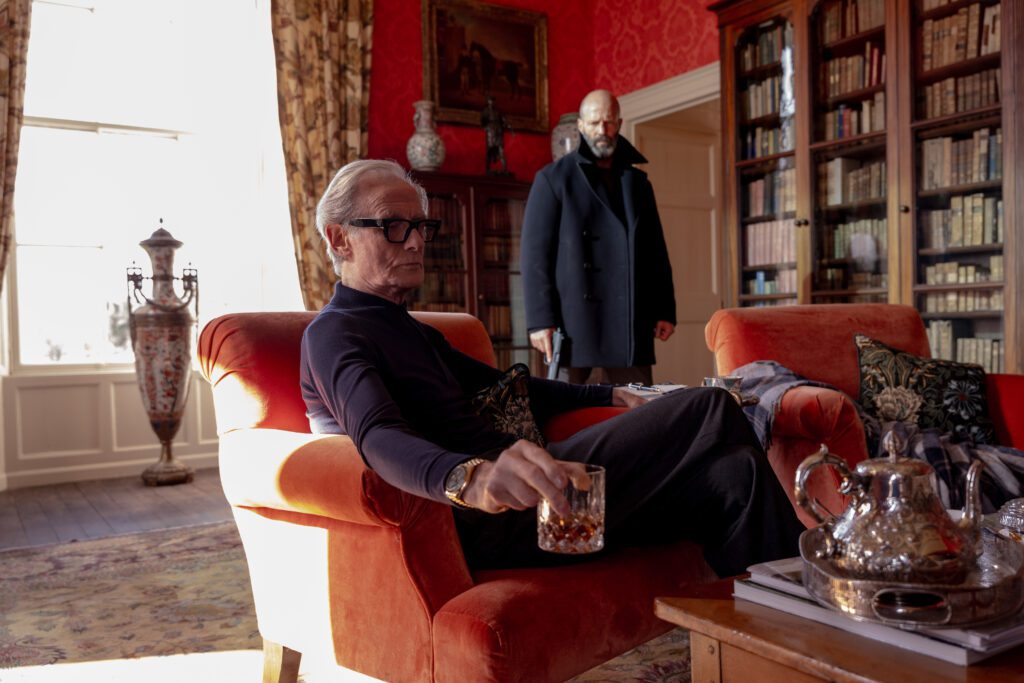
Ric Roman Waugh’s latest film, Shelter, falls firmly into the latter category. From its opening moments, the film refuses to behave the way trailers, formulas, or expectations suggest it should. It does not ease you in. It drops you straight into the cold, isolating depths of its world and dares you to keep up.
“I don’t want you to watch my action,” Waugh told Peach Pop Five. “I want you to feel it.”
That philosophy pulses through every frame of Shelter, a brutal yet deeply human thriller anchored by raw performances, punishing environments, and a relationship that sneaks up on you and then refuses to let go.
No Soundstage Safety Net
One of the most striking things about Shelter is how real it feels. Not looks real, feels real. The wind bites. The isolation weighs heavy. The danger does not blink.
That is no accident.
“Sound stages bore the hell out of me,” Waugh said. “Authenticity breeds authenticity.”
Rather than recreating danger in a controlled environment, Waugh took his cast and crew straight into the elements. The film’s remote lighthouse setting was built to scale on a cliff along the Irish Sea, surrounded by ruins, stone staircases, and relentless weather. It was not just a set, it was an ordeal.
“When that cold wind is hitting you, the boards are creaking, and there’s real isolation,” he said. “There’s a kinetic energy you can’t fake.”
That same philosophy extended to the water sequences, filmed in the United Kingdom and Ireland using massive tanks placed outdoors and subjected to 70 mile per hour winds and four foot swells. Camera operators were strapped down. Nothing was comfortable. Nothing was easy.
And that discomfort bleeds directly into the film’s DNA.
Action You Do Not Watch, You Live
Waugh comes from the world of stunts, and it shows, not in spectacle for spectacle’s sake, but in how the action is framed emotionally.
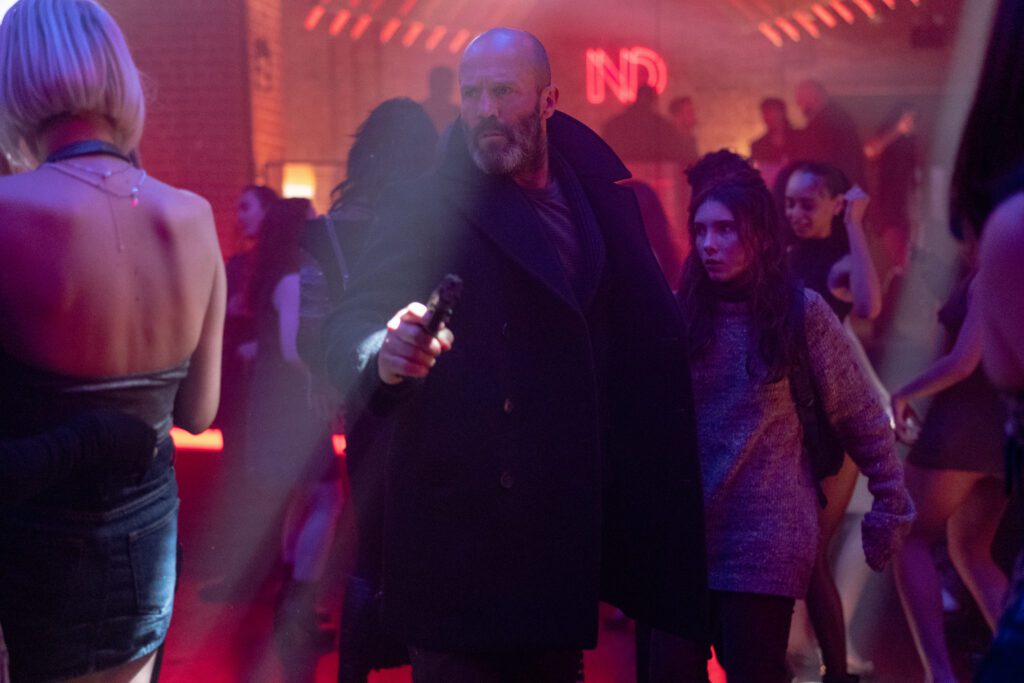
“For years people asked me, ‘What’s it like to be set on fire, to jump off a building?’” he said. “What they were really asking was, what did it feel like?” In Shelter, action is not just choreography, it is consequence. A car chase is not thrilling because it is loud or fast, it is terrifying because there is a 13 year old in the back seat. A fight scene is not about who wins, it is about who might get hurt if someone loses control.
“You’re not watching the car chase,” Waugh said. “You’re in the car.”
That immersion is relentless. Bullets tear through windshields. Vehicles flip violently. The tension does not let you breathe, and when it finally does, it is only long enough to remind you what is at stake.
The Power of a Two Way Bond
At the heart of Shelter is an unlikely bond between two damaged souls, a man living in self imposed exile and a young girl carrying more trauma than her age should allow.
This is not a protector and child dynamic played in one direction. It is mutual. She protects him just as fiercely as he protects her.
That balance was essential to Waugh.
“We looked at over 500 girls,” he said. “Then I saw Bodie. There was a fire in her eyes, an old soul.”
When she was paired with Jason Statham, the chemistry was immediate and undeniable.
“You can’t fake that,” Waugh said. “That’s why we go to the movies.”
He compares the pairing to iconic duos like Man on Fire, Léon: The Professional, and 48 Hours, stories where connection turns survival into something meaningful. Without that bond, the violence is empty. With it, every choice hurts more.
The Antihero We Cannot Look Away From
Waugh has never been interested in clean heroes or clear moral lines, and Shelter leans fully into that ambiguity.
“We’re not a black and white society,” he said. “We’re all gray.”
The film invites the audience to root for a man whose past is intentionally murky, whose hands are not clean, and whose sense of justice is constantly in question. And yet, somehow, you empathize. You understand him. You stay with him.
“Those characters relate to us because they’re flawed,” Waugh said. “They’re dealing with their demons. They’re not ten feet tall and bulletproof.”
Shelter does not ask whether its protagonist deserves redemption. It asks whether redemption is even possible when the wolves are already circling.

What Shelter Is Really About
Strip away the gunfire, the chases, the isolation, and Shelter reveals itself as something far quieter and more devastating.
“It’s about two lost souls,” Waugh said. “One man living in exile, trying not to end it. One girl in her own form of exile through loss.”
Together, they form a fragile family unit, one that must survive not just physical threats, but moral ones. Can you protect someone without destroying them? Is safety worth the cost of truth? And when danger follows you, do you sacrifice connection to spare someone else?
Those questions linger long after the credits roll.
Waugh does not offer easy answers. He does not sugarcoat the ending. But he does offer something rare, emotional honesty.
“I want you to leave with hope,” he said. “And I want you to talk about it after.”
A Film That Earns the Theater Experience
When Shelter ends, it does not feel unfinished, but it does feel complete. There is satisfaction in its finality, even as it leaves room for reflection.
It is the kind of film that reminds you why theaters matter, why immersion matters, and why stories rooted in pain, connection, and moral complexity still hit hardest when shared in the dark with strangers.
Shelter is not just a movie you watch, it is one you carry with you.